Baja Ergonomics System
Northwestern Baja 2023-2024 Vehicle
Ergonomics Lead
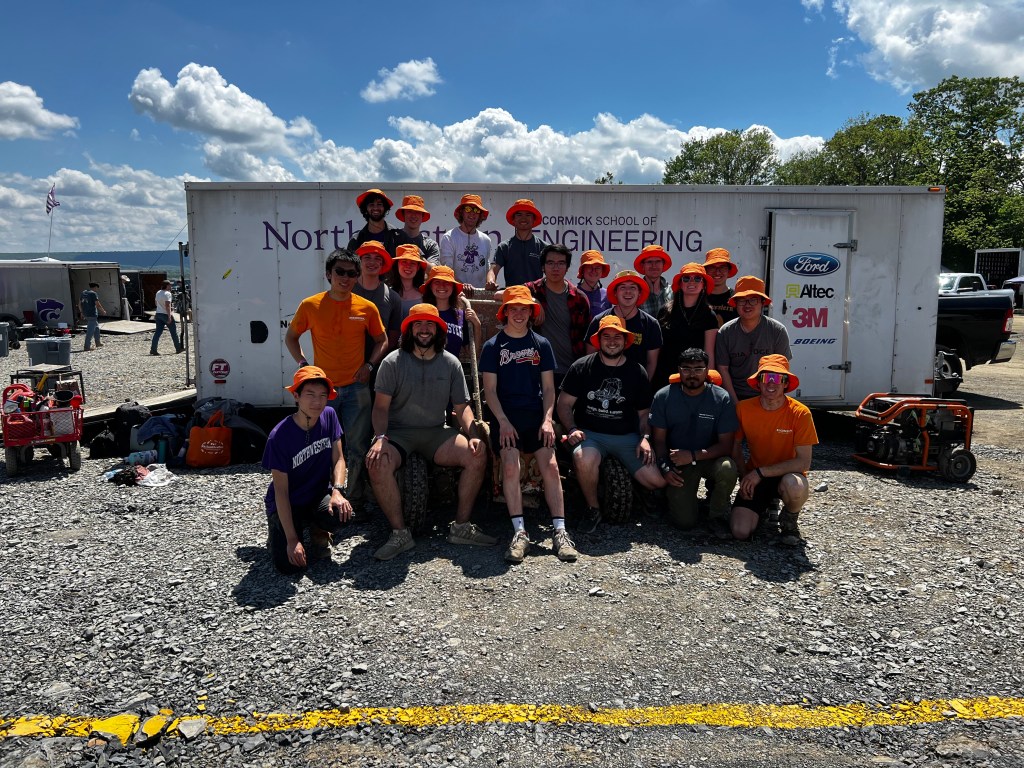
Led a 9-member team to design a flexible ergonomic system accommodating drivers from 5’2″ to 6’3″.
Skills: System Integration, SolidWorks CAD, Siemens NX CAM, CNC Milling, Leadership, Human Centered Design
Overview
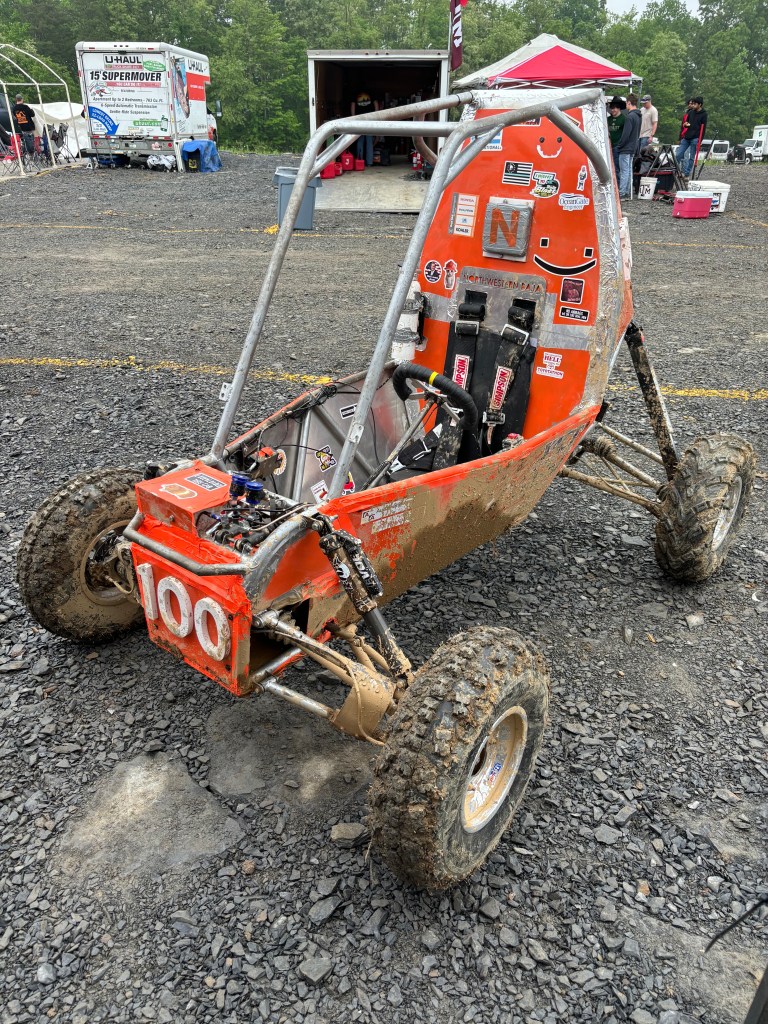
Every year, the Northwestern University Baja team designs and builds a custom offroad vehicle as part of the Baja SAE national collegiate competition series. The car is completely designed by students around a stock engine, and almost everything is made in-house at Northwestern University.
The competition is centered around events aimed to test our vehicle. Most notably, a 4-hour endurance race punishes the car, forcing the team to be adaptable and solution-oriented in order to finish the race. Other events include a Suspension course, a Maneuverability course, a Sled Pull, a Rock Climb, and a Hill Climb, each testing a unique facet of the vehicle.
Our team consists of 70 students encompassing 5 subteams: Chassis, Electronics, Ergonomics, Powertrain, and Suspension. Each team has a lead, who all report to the Chief Engineer, Project Manager, and Manufacturing Lead.
The Ergonomics System
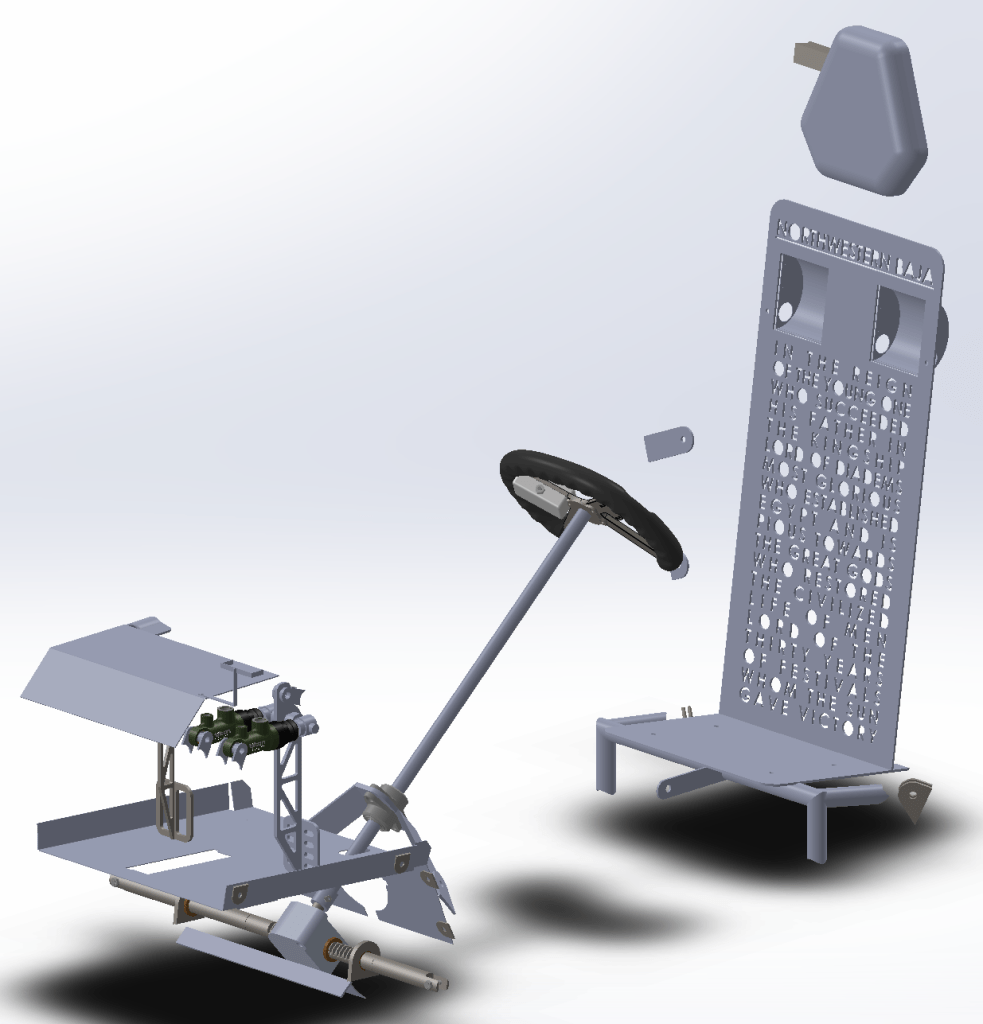
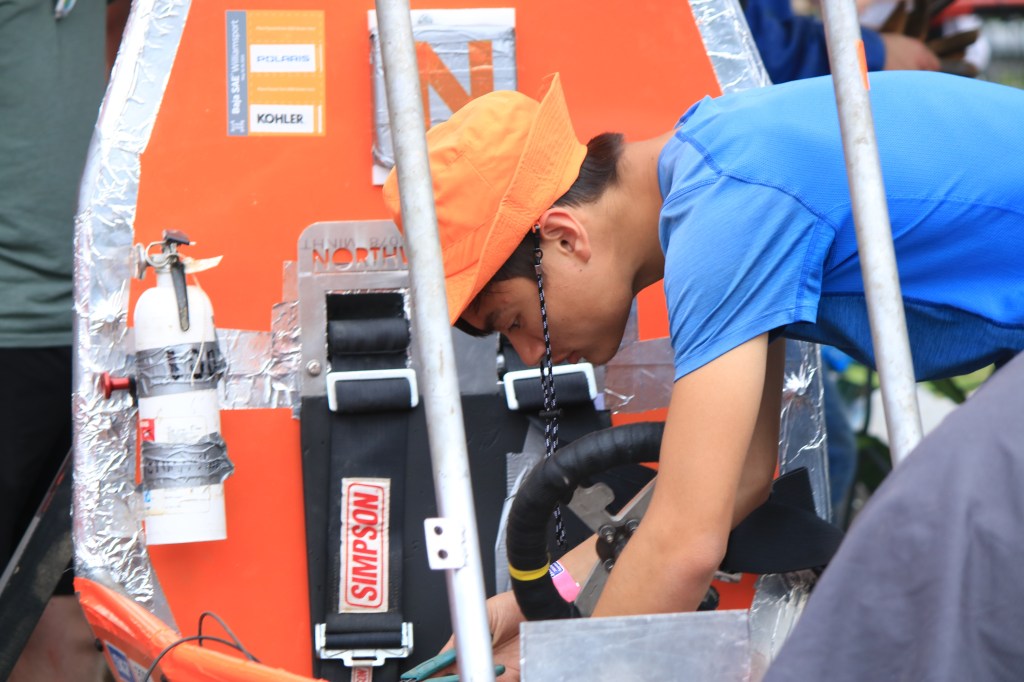
As the 2023-2024 Ergonomics Lead, I designed the packaging and spacing of the cockpit. This includes the pedal and seat positioning, all steering components, and driver safety features. The system prioritizes drivability and comfort in an aggressively sized vehicle, while maintaining the serviceability of its components and the surrounding parts.
THe method
Todd
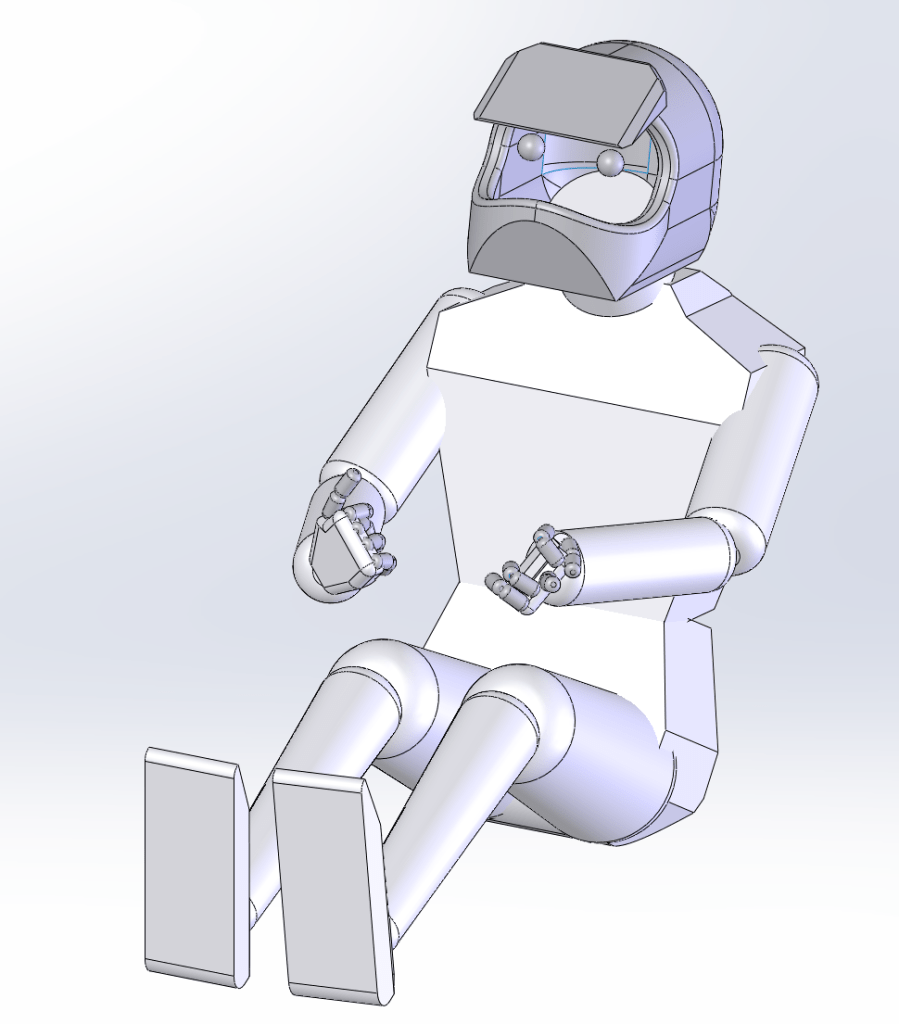
Most of my work was built around a model affectionately named Todd. Todd represents a 95th percentile male, which is the largest person the rules requires the vehicle fit. The 95th percentile male in 2023 was roughly 6’2″ and 225lbs.
My team
Once we decided who was going to be driving at our competition, I adjusted Todd to fit our largest driver, who was slightly larger than the 95th percentile, at 6’3″ and 240lbs. I also took into account our smallest possible driver, who measured in at 5’2″ and 120lbs.
Design Changes
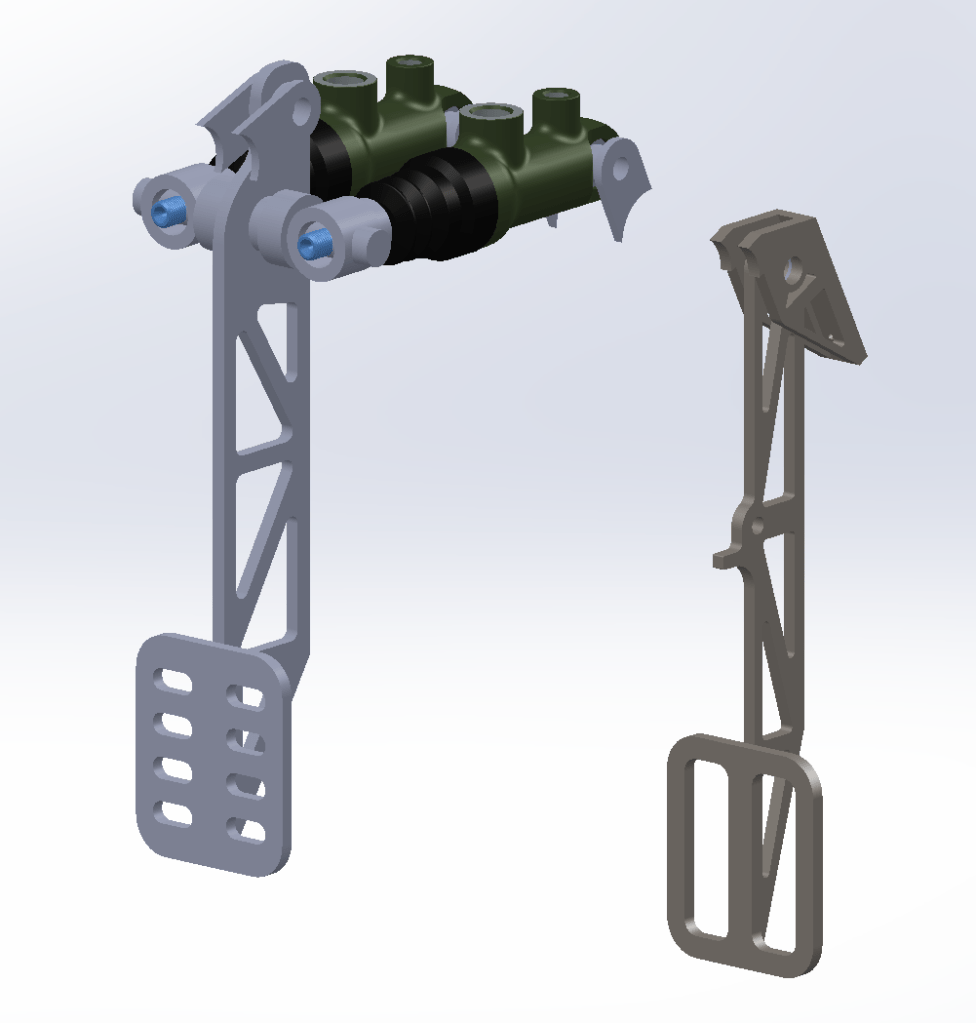
Top Mounted Pedals
One major design change was moving to top mounted pedals. All of our previous vehicles had bottom mounted pedals, and with the introduction of the 4wd requirement, packaging in the toebox had been getting increasingly more cramped. Top mounted pedals aimed to help with this by moving the mounting tube away from the front gearbox, steering, and suspension components, increasing serviceability for all components in the toebox.
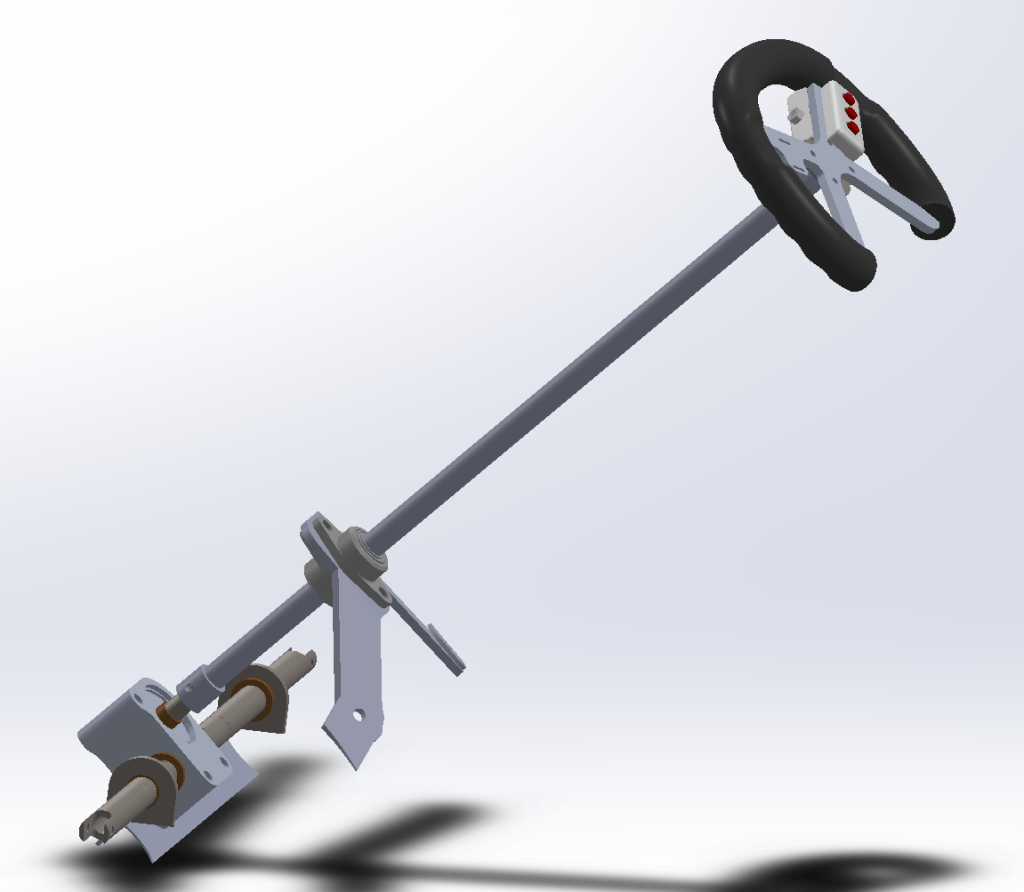
Straight Steering Column
Another major design change was the simplification of the steering column. In previous years, the steering rack was mounted in front of the front gearbox due to suspension geometry. This required a u-joint in order to route to the driver. This year, the geometry was changed so that the steering rack was mounted behind the front gearbox, closer to the driver. This allowed me to remove the u-joint completely, and route straight to the driver. This design did have some drawbacks, as the steering was offset from center to accommodate the driveshaft, though after interviewing the endurance drivers, it did not seem to be noticeable during driving.
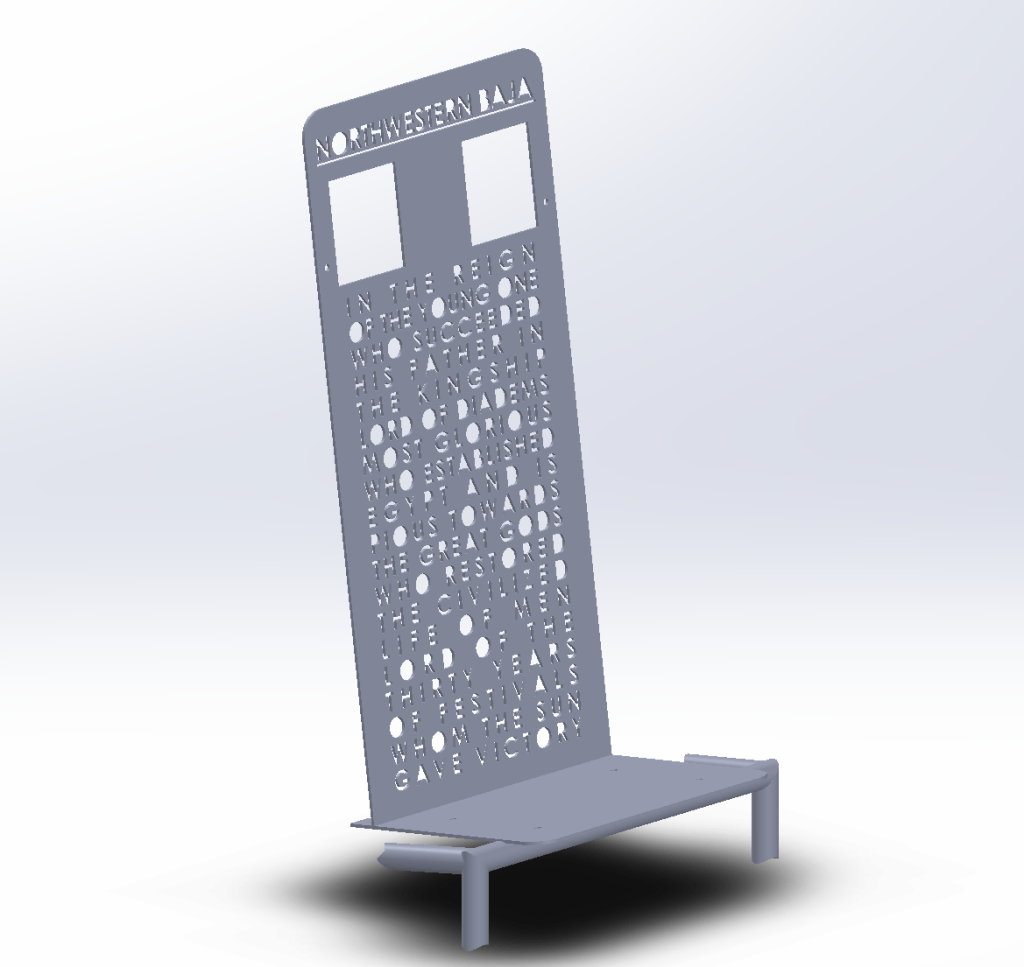
Simplified Seat
The last major design change was the simplification of the seat. In previous years, the seat was composite, requiring lots of hours to shape and prepare properly. This year, I decided top simplify it, making the seat two waterjet aluminum sheets. This not only cut down on the time needed to make it, but it also reduced the cost greatly.

