Dingo
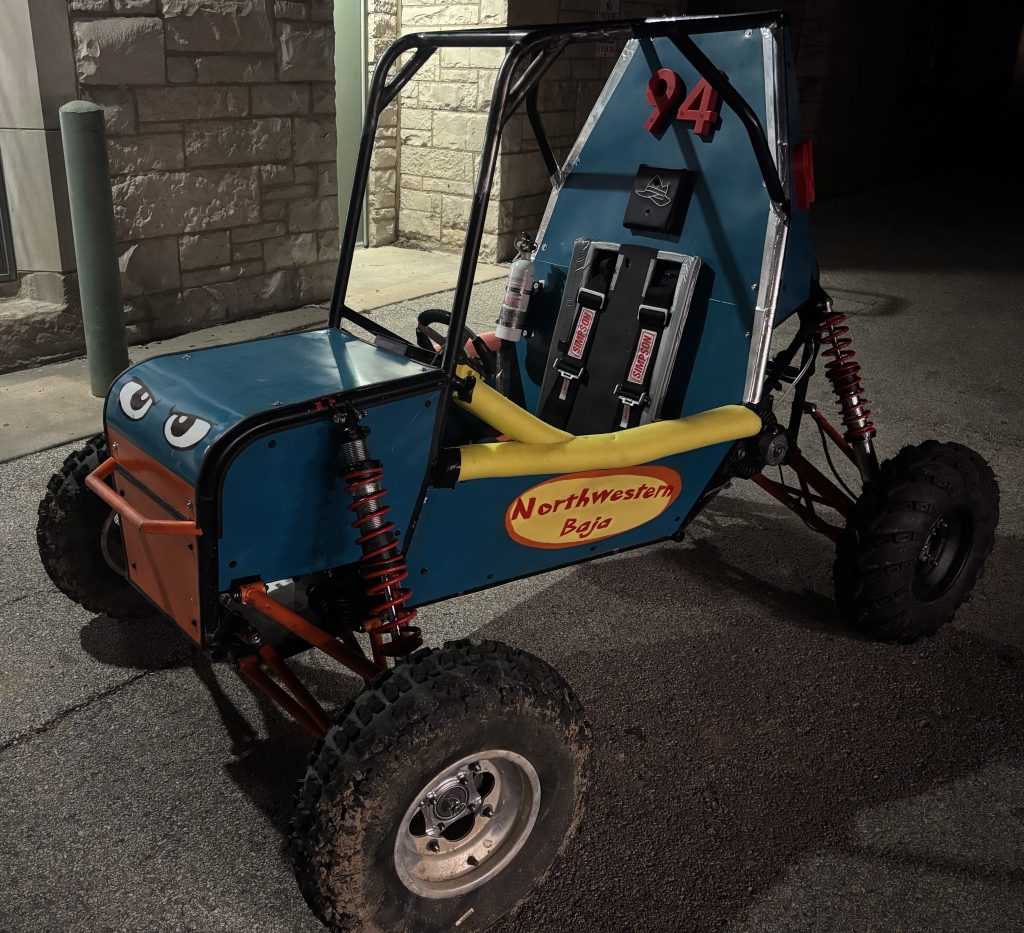
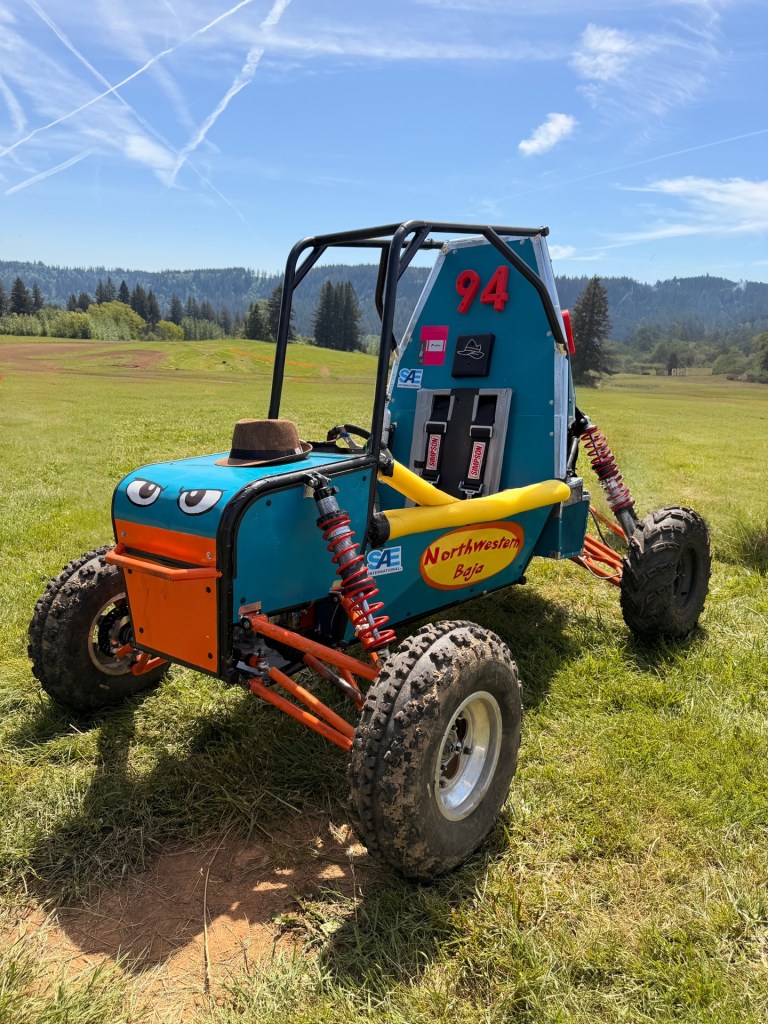
Northwestern Baja 2025-2026 Vehicle
Chief Engineer
Led a 70-member team to design and fabricate the full 2025-2026 vehicle, affectionately named Dingo. Responsible for approving all component design, and served as secondary approver for all CAM and manufacturing drawings.
Skills: System Integration, SolidWorks CAD/FEA, Siemens NX CAM, Leadership, Offroad Suspension, Brakes, Powertrain
Overview
Every year, the Northwestern University Baja team designs and builds a custom offroad vehicle as part of the Baja SAE national collegiate competition series. The car is completely designed by students around a stock engine, and almost everything is made in-house at Northwestern University.
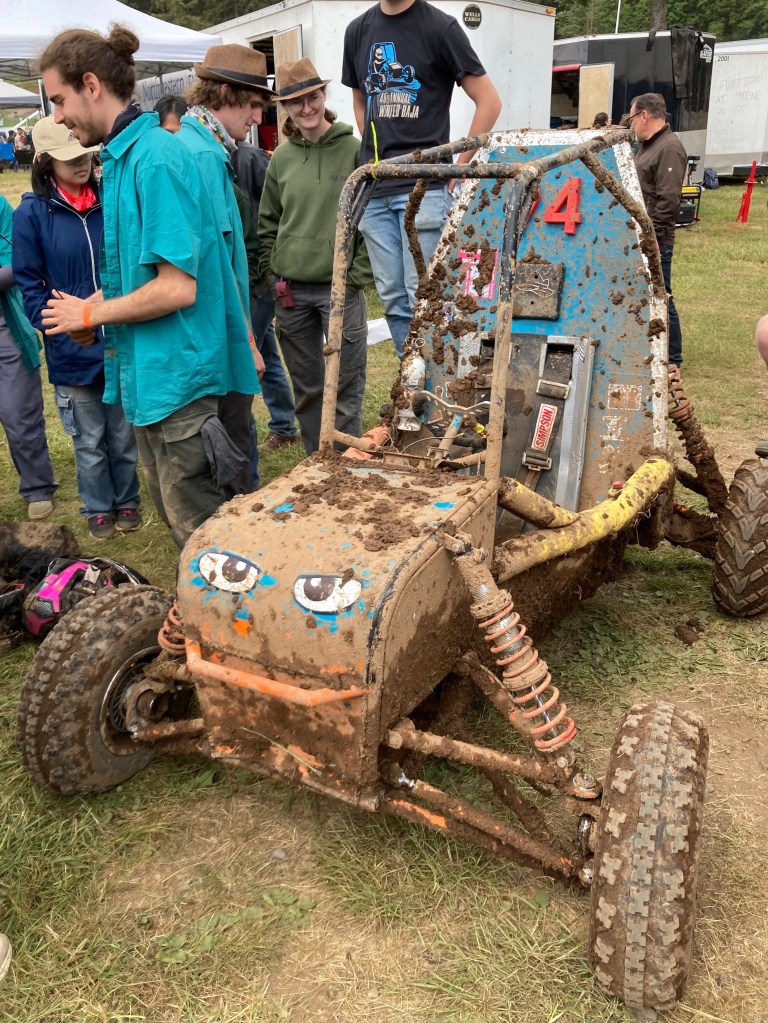
The competition is centered around events aimed to test our vehicle. Most notably, a 4-hour endurance race punishes the car, forcing the team to be adaptable and solution-oriented in order to finish the race. Other events include a Suspension course, a Maneuverability course, a Sled Pull, a Rock Climb, and a Hill Climb, each testing a unique facet of the vehicle.
Our team consists of 70 students encompassing 5 subteams: Chassis, Electronics, Ergonomics, Powertrain, and Suspension. Each team has a lead, who all report to the Chief Engineer, Project Manager, and Manufacturing Lead.
THe Car
As the Chief Engineer, I led the overall design and execution of the vehicle. The car is built to withstand jumps, rocks, logs, tight corners; all during a 4-hour wheel-to-wheel endurance race against 75 other collegiate teams.
My goals for the car were: improved stability and maneuverability, better acceleration and torque, and improved serviceability.
Each subteam has their own unique goals and requirements for their design, but I worked to ensure cohesion and integration across all 5 teams.
Vehicle Integration
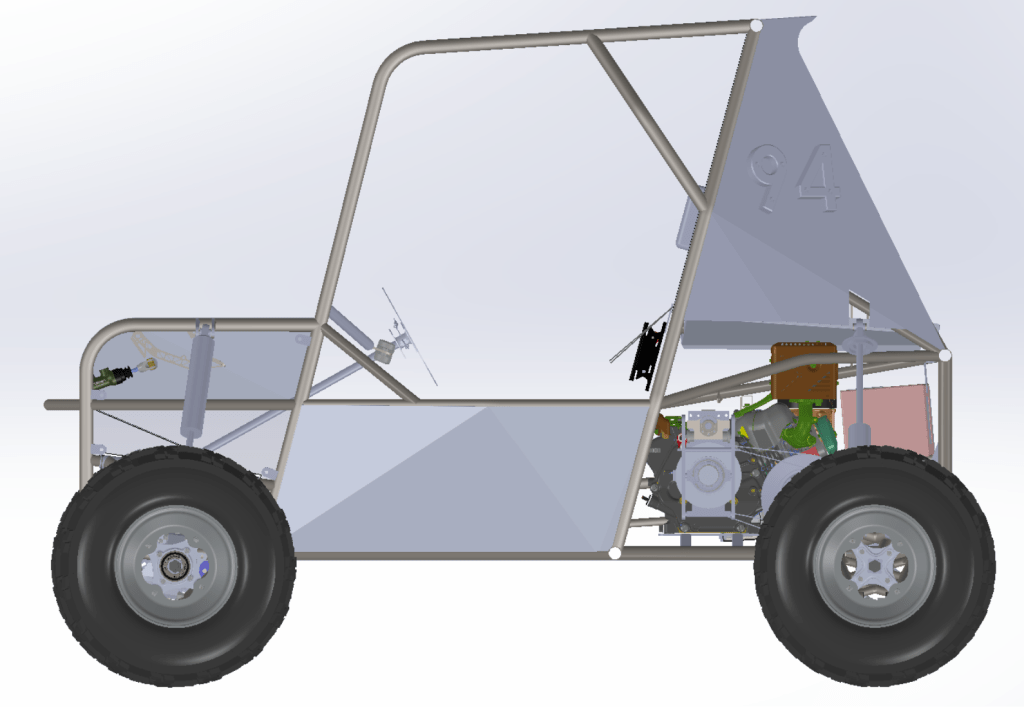
I was responsible for creating and maintaining a full vehicle CAD assembly in Solidworks, ensuring subteam integration and rule compliance across the entire car. The assembly contains 1200 components files including all fasteners, spacers, and tabs.
Low Center of Gravity
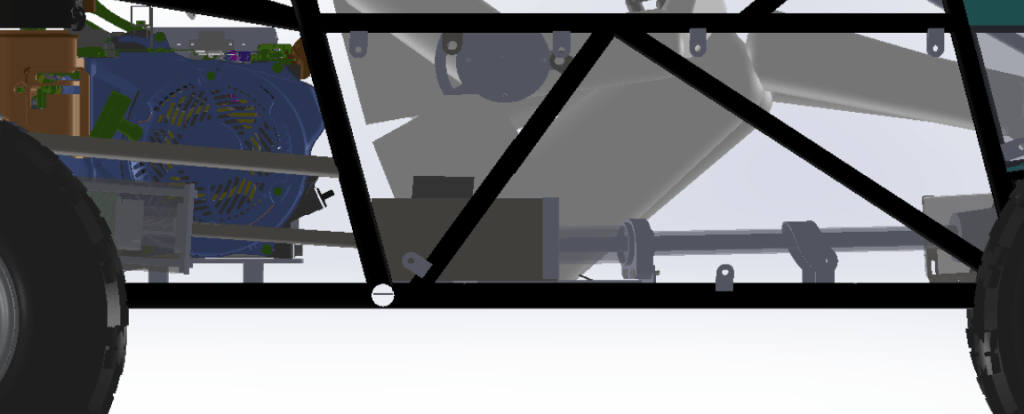
In order to increase stability, one method was to lower the center of gravity (COG) as much as possible. The driver, which weighs 155lbs on average, weighs as much as the next two heaviest components, the engine and the frame, combined. By dropping the driver the floor, and routing the powertrain around them, we were able to drop the COG by an estimated 0.68in.
Increased Suspension REsponsiveness
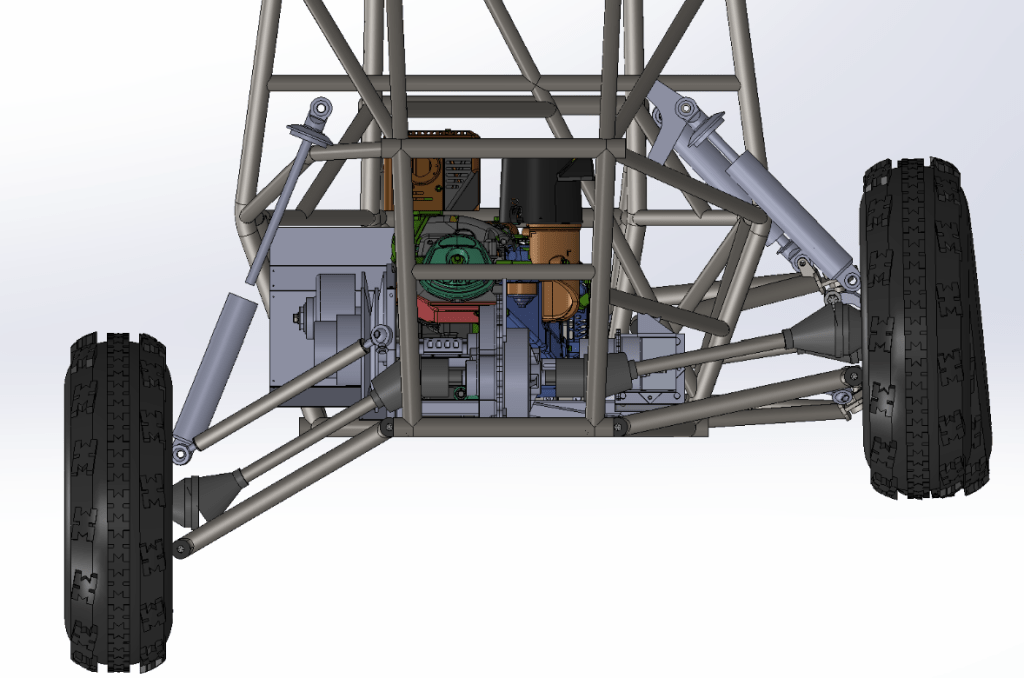
In order to improve stability, we also looked to increase our suspension responsiveness by switching to coilovers from air shocks. With the coilovers, we created a full flexible suspension assembly to ensure clearances to the frame and powertrain components.
Rear POcket Packaging
With the increased torque, we had a larger gearbox than previous years. This required us to increase the rear pocket of the frame to allow us remove the gearbox.
Steering vs Powertrain
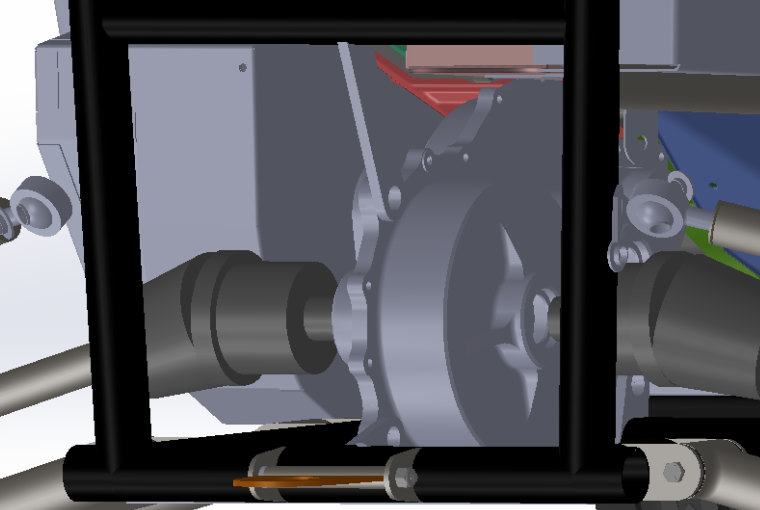
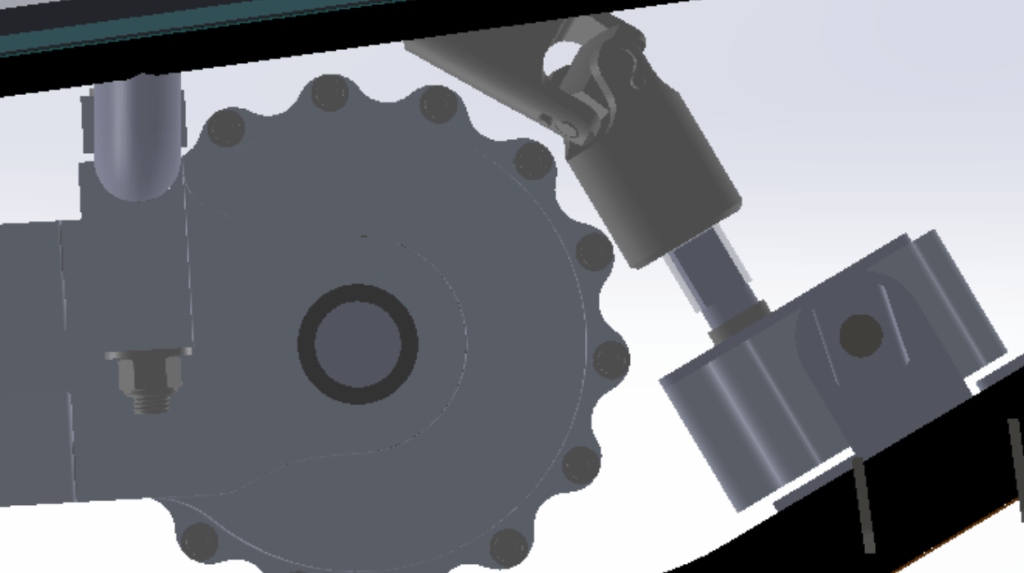
In the 2024-2025, due to the toebox size and suspension geometry, the steering column was routed under the halfshafts using a double u-joint. This year, with better front differential placement and toebox size, the steering was able to be simplified and routed over the differential utilizing a single u-joint.
SUspension vs Powertrain & Chassis
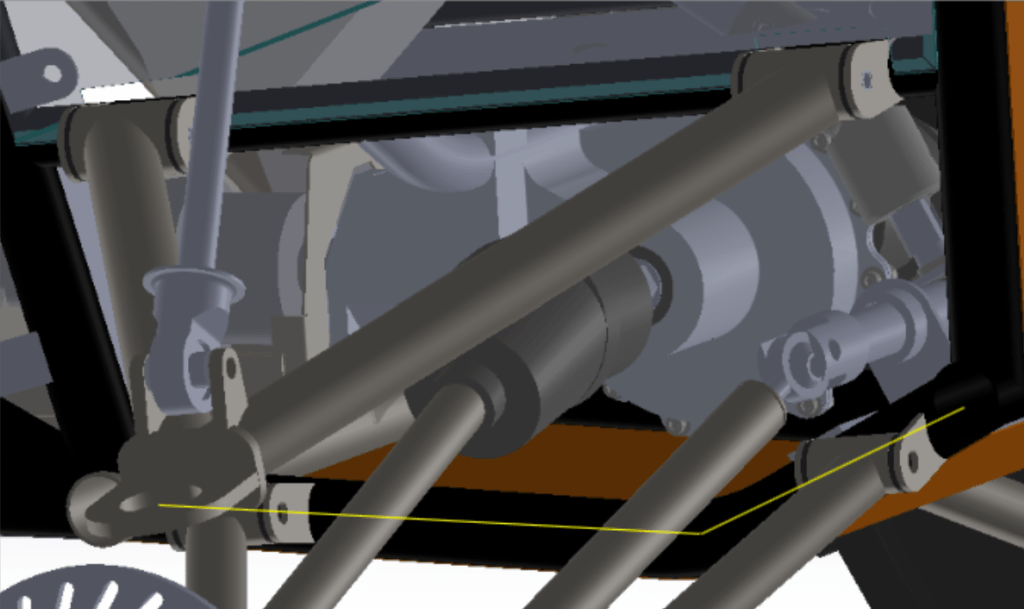
In order to maximize suspension performance, the suspension geometry was set first, than powertrain and chassis were designed with it in mind. The lower frame member was bent upward to accommodate the suspension caster, while maintaining space for the front differential and steering assemblies.
Other Responsibilities
Leadership
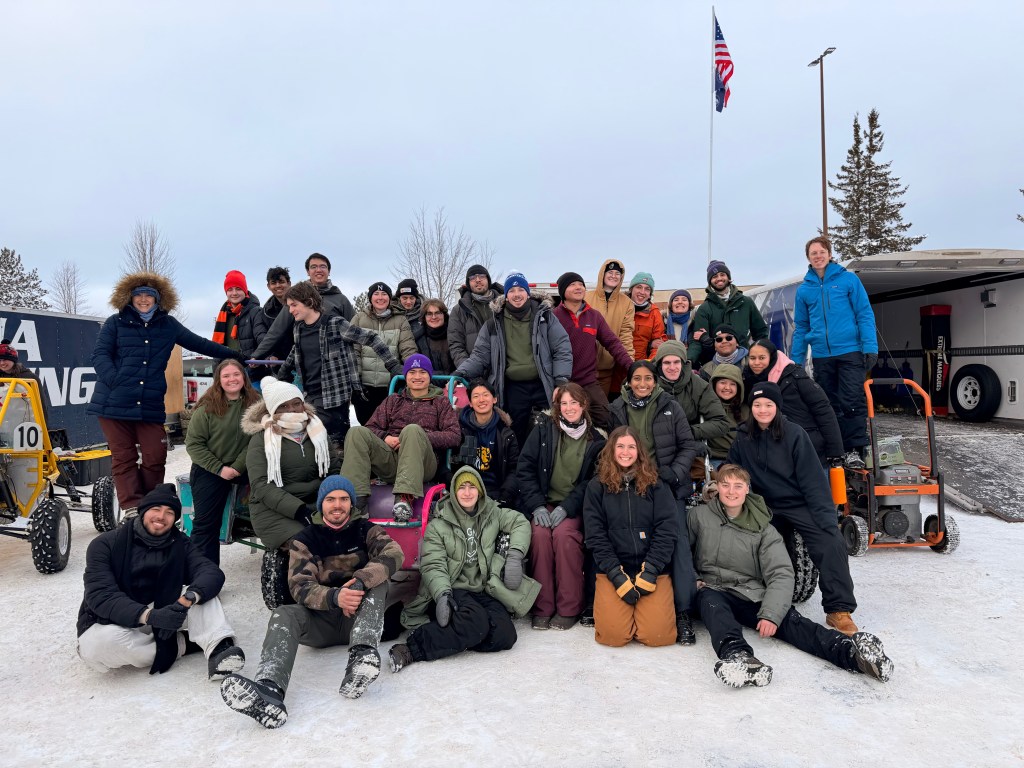
As the Chief Engineer, I collaborated with the Project Manager and Manufacturing Lead to create and enforce timelines and deadlines, organize competitions and team events, and lead executive team meetings. I also assisted the Training Leads to create a new member training program. I coauthored the first set of technical standards for the team to ensure design cohesion across subteams and projects.
CAM APproval
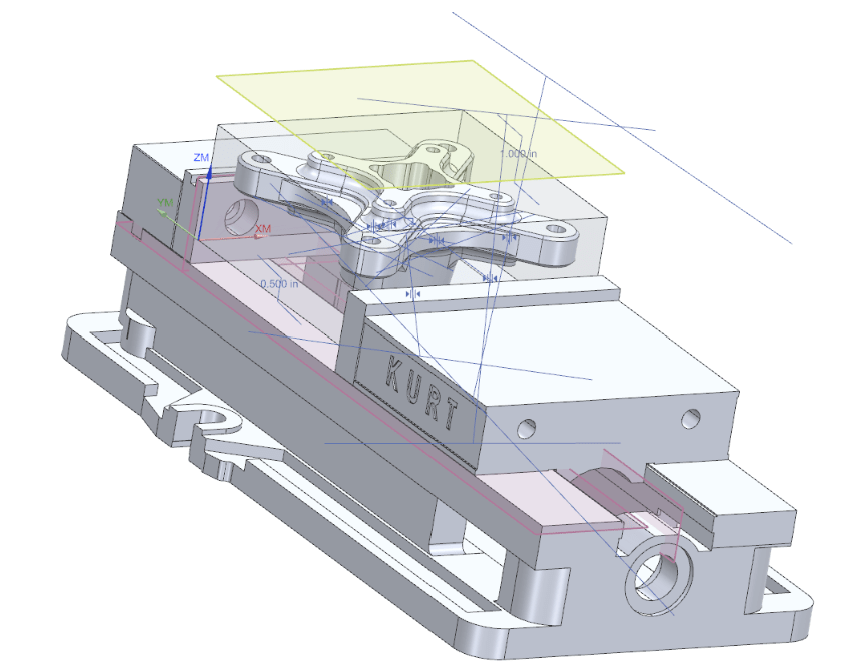
I served as the secondary approver of CAM, checking feeds and speeds, proper depths of cut and stepovers, and tool clearances across 9 CNC projects . I also checked tool paths to ensure proper engagement and non-cutting moves.
Drawing APproval
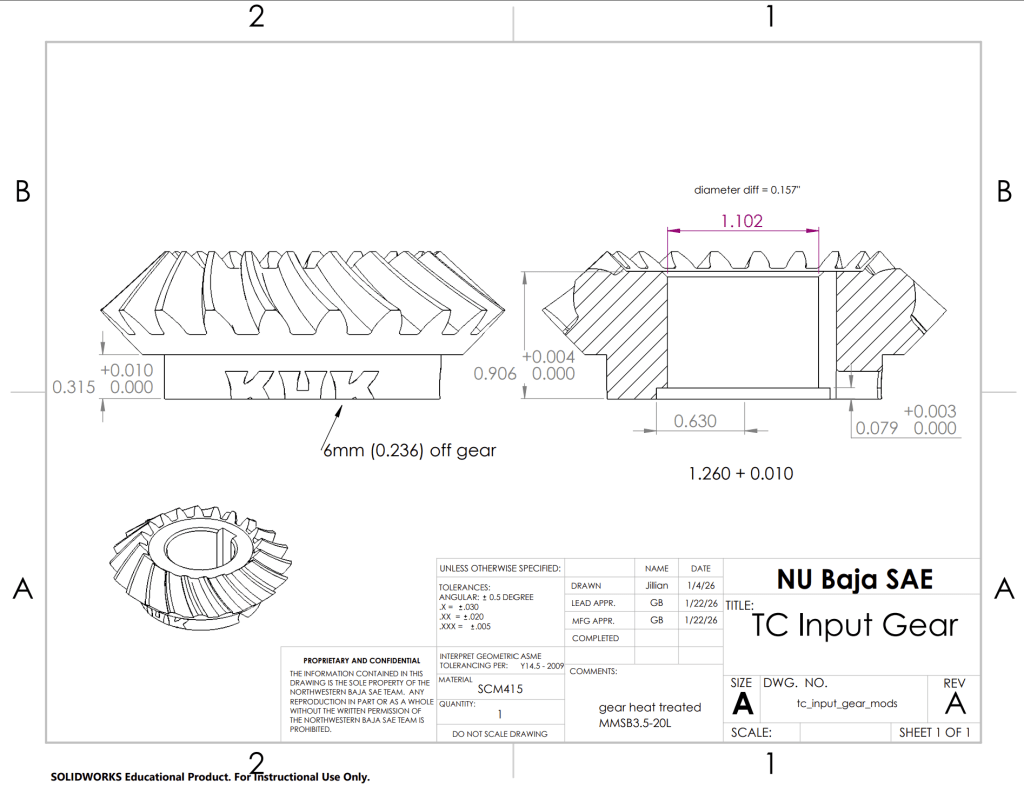
I also served as the secondary approver of manufacturing drawings. When approving, I made sure to check tolerances, and fits to mating parts, as well as ensuring organized, readable drawings.
Results
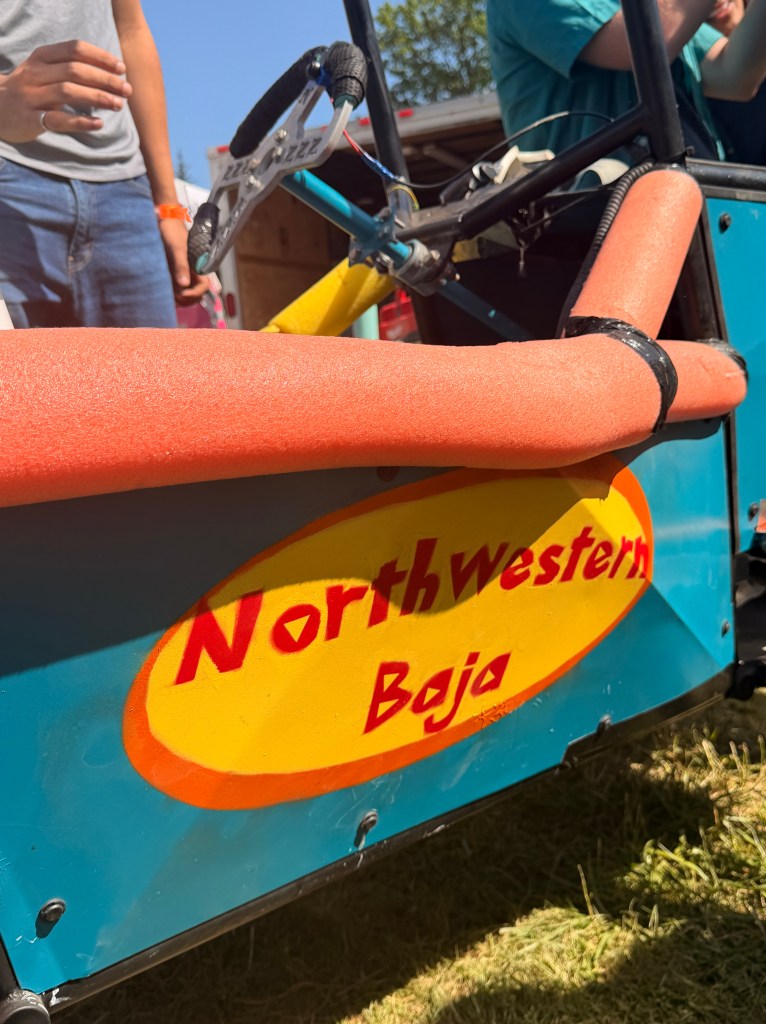
Dingo raced at Baja SAE Oregon 2026 against 75 other collegiate teams.
Endurance: 23/76
Hill Climb: 26/63
Maneuverability: DNF/32 finishers
Rock Crawl: 32/57
Acceleration: 33/63
This was our first car in 5 years to finish the endurance race and our 3rd best endurance finish in team history.

